
Chiropractic Care
A non-invasive, drug-free approach to musculoskeletal health that emphasizes spinal health and the body's natural ability to heal.

Chiropractic: A Foundation for Spinal Health
Chiropractic care is a non-surgical, drug-free approach to musculoskeletal health that has helped hundreds of millions of people around the world live pain free. At The Busch Chiropractic Center, it forms the foundation of everything we do.
The philosophy is straightforward: Your spine houses and protects your central nervous system. The joints, muscles, and ligaments around it directly influence how well that system functions. When those structures are misaligned, restricted, or irritated, the consequences extend far beyond local pain. Chiropractic care addresses those structural problems directly, helping the body do what it's already trying to do: heal.
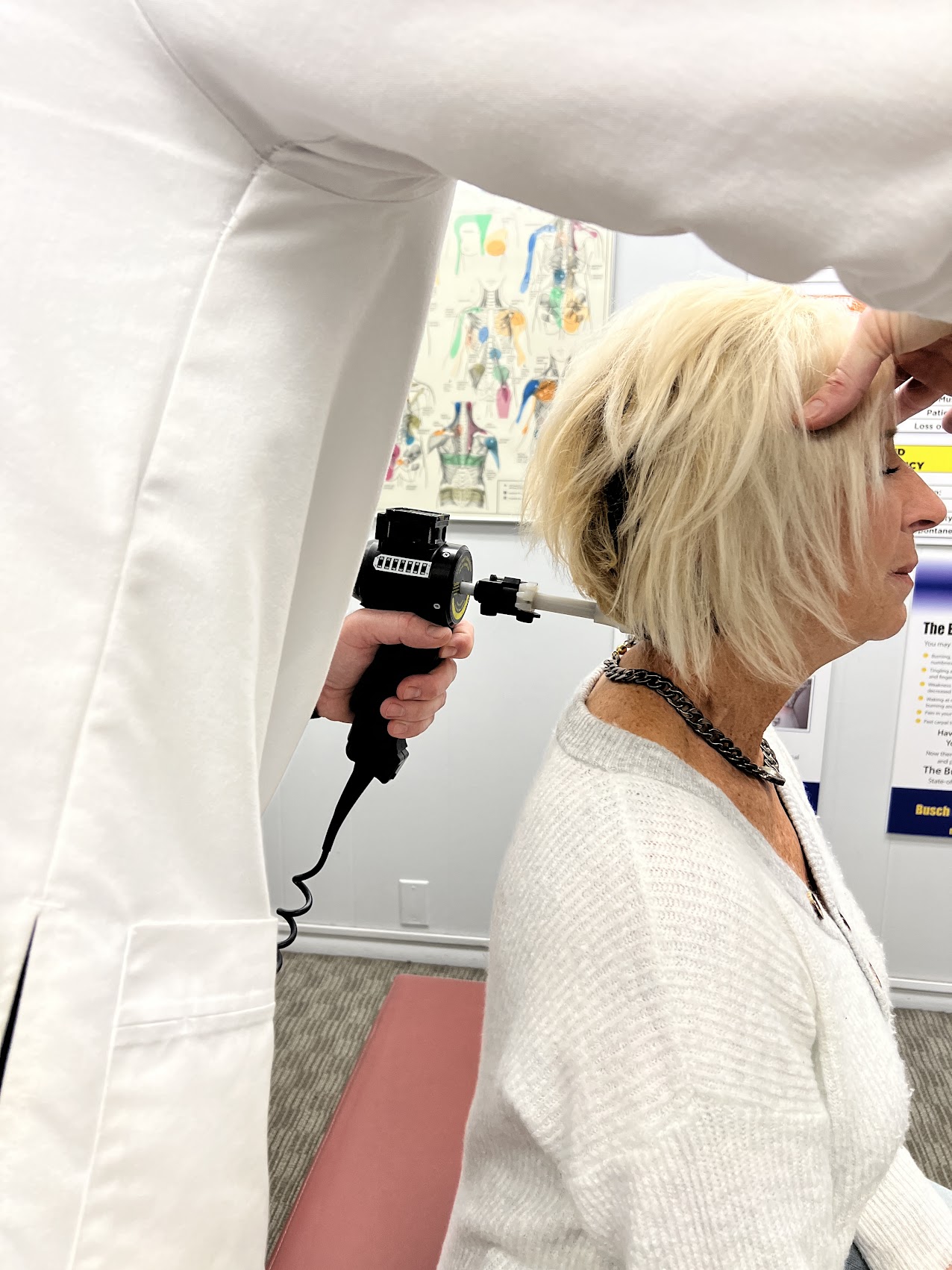


What Is a Chiropractor?
A chiropractor is a health care professional that focuses on disorders of the musculoskeletal and nervous systems, and the effects of these disorders on general health. Chiropractic care is used most often to treat neuromusculoskeletal complaints including back pain, neck pain, pain in the joints of the arms or legs, headaches, and more!
Conditions Chiropractic Care Helps
- Back pain
- Neck pain
- Sciatica
- Herniated and bulging discs
- Migraines and tension headaches
- Whiplash and personal injuries
- Sports injuries
- Arthritis pain
- Repetitive strain injuries
- Postural pain
- Pregnancy-related back and pelvic pain
- Chronic pain management
Real Chiropractic Care Results on Video
Hear directly from patients who found relief from chiropractic care at Busch Chiropractic. Tap any video to watch their story.
Frequently Asked Questions
Chiropractors are licensed healthcare professionals who diagnose and treat disorders of the musculoskeletal and nervous systems — most commonly back pain, neck pain, headaches, and joint problems. The core technique is the chiropractic adjustment: a controlled, precise movement applied to a restricted joint to restore proper motion and reduce nerve irritation. We also use soft-tissue work, rehabilitative exercise, ergonomic coaching, and supportive therapies depending on what each patient needs.
Yes — when performed by a properly trained, licensed chiropractor, adjustments are remarkably safe. Serious complications are extremely rare, and the risk profile is dramatically better than that of long-term pain medication, repeated injections, or spinal surgery. Before any adjustment, we evaluate your history, exam findings, and imaging (when available) to confirm that adjustment is appropriate for your specific anatomy.
Not at all. The popping or cracking sound is called a cavitation — it's gas releasing from the fluid inside a joint when the joint is briefly stretched, exactly like cracking your knuckles. The sound is harmless and doesn't indicate that anything is being broken or moved out of place. Many adjustments produce no sound at all, especially the gentle, low-force techniques we often use.
No. Most patients complete a defined treatment plan that resolves their primary complaint, and then have the option of periodic maintenance care if they want to keep their spine functioning well — much like getting your teeth cleaned twice a year. We do not believe in indefinite care that produces no measurable progress, and we re-examine you regularly so you always know exactly where you stand.
Physical therapy focuses primarily on exercise-based rehabilitation, while chiropractic emphasizes restoring proper joint motion and nervous system function through hands-on care. The two approaches are highly complementary, and we often combine adjustment with rehabilitative exercise within the same plan. Many patients who haven't fully responded to PT alone respond well when chiropractic care is added.
An actual adjustment takes just seconds. A typical office visit — including a brief check-in, the adjustment itself, and any supportive therapies — usually runs 15–30 minutes. New-patient exams take longer because we conduct a thorough history and physical assessment before any treatment begins.
Some patients feel mildly sore for 12–24 hours after their first adjustment — similar to the feeling after starting a new exercise routine. This is your body adapting to restored motion in a joint that has been stuck. Drinking water, applying gentle heat or ice, and gentle movement all help. Persistent or sharp pain after an adjustment is rare and should be reported.
For many patients, yes. Tension headaches and cervicogenic headaches (those originating from the neck) respond very well to chiropractic care because the underlying problem is often joint and muscle dysfunction in the upper cervical spine. Migraine sufferers also frequently see reduction in both frequency and intensity once cervical alignment is addressed.
Yes. Chiropractic care is widely used during pregnancy to manage low back and pelvic pain, and many pregnant patients benefit from it significantly. We use modified positioning and gentle techniques tailored to each trimester. Always let us know if you're pregnant or trying to conceive so we can adjust the approach accordingly.
Yes — pediatric chiropractic care is gentle and appropriate for children of all ages when indicated. The techniques and force used are dramatically different from adult care. We see children for sports injuries, posture concerns, scoliosis monitoring, and similar issues. As with any healthcare for children, we work in coordination with the family's pediatrician.
Many patients feel meaningful improvement within the first few visits. Acute problems often resolve within 4–8 weeks of care; chronic conditions that have been around for years typically take longer. We track your progress objectively (range of motion, pain levels, functional improvement) so the answer to this question is based on measured results, not just how you feel on any given day.
No — chiropractors are primary-access healthcare providers, which means you can come directly to us without a referral. That said, we work closely with primary care doctors, orthopedists, neurologists, and other specialists, and we will refer you out if your condition is outside the scope of conservative care.