
Balance & Stability Protocol
Did you know that the number one cause of injury for people over 60 is a fall? Did you know the number one cause of accidental death for people over 65 is also a fall?

Balance, Stability and the Freedom To Move Confidently
Do you worry about falling? Have you experienced falls recently or find yourself unsteady on your feet? Are you looking for ways to improve your balance?
Falls are the leading cause of injury in people over 60 and the top cause of accidental death for those over 65. At The Busch Chiropractic Center in Fort Wayne, we understand the critical nature of these statistics and have implemented the Balance & Stability Protocol to address these issues, providing balance and fall prevention therapy. These treatments help improve balance, stability and coordination to help prevent falls and enhance cognitive function.
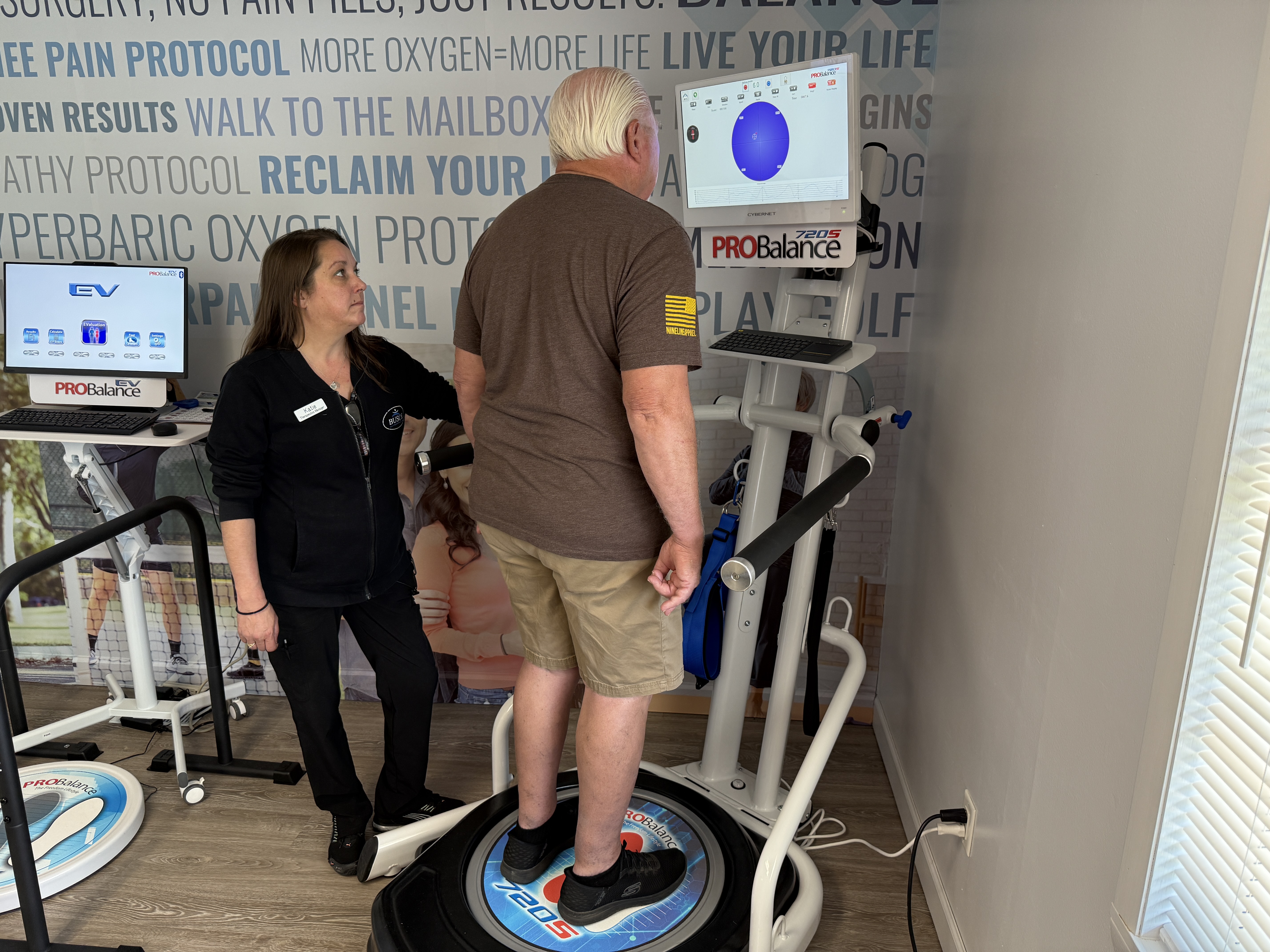
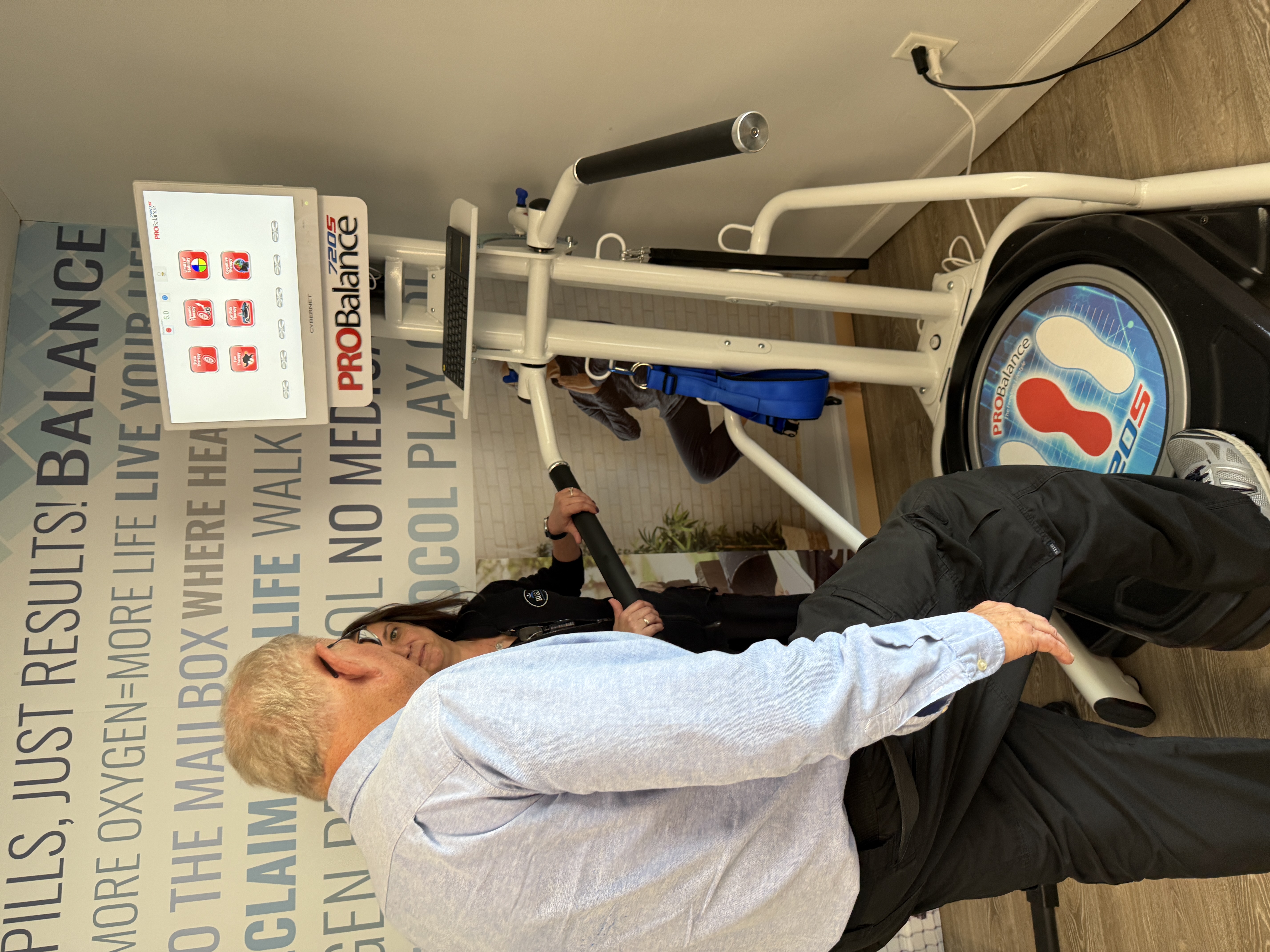
How the Balance & Stability Protocol Works
Improving balance and stability is essential for preventing falls and maintaining independence, especially as we age. The Balance & Stability Protocol is designed to improve your stability through a targeted, three-step approach, making everyday activities safer and more enjoyable.
Step 1: Personalized Evaluation
Our first step is to assess your Stability Index, a critical measure of how your body maintains balance. Based on this evaluation, we tailor a treatment plan designed to strengthen your musculoskeletal systems and correct any deficits, enhancing your overall stability.
Step 2: Targeted Treatment
Using specialized protocols, we stimulate key soft tissues and neural pathways. This targeted approach aids in recovering lost balance and enhances your body's natural coordination abilities, making each step more secure.
Step 3: Balance Freedom
Gain freedom from the fears of falling and instability. Our treatment protocol can improve your quality of life and restore your peace of mind, allowing you to enjoy daily activities without worry.
Don't Let Fear Define Your Life
The fear of falling shouldn't dictate the way you live. Whether you've already had a fall or you simply notice your balance isn't what it used to be, the Balance & Stability Protocol may help.
If you or a loved one is concerned about falls, feels unsteady or needs help with stability, don't wait for an accident to happen. Contact The Busch Chiropractic Center today at (260) 471-4090 to learn more about how therapy with the Balance & Stability Protocol can significantly improve your quality of life.
→ Take our Balance Self Test to assess your risk.
Real Balance & Stability Protocol Results on Video
Hear directly from patients who found relief from balance & stability protocol at Busch Chiropractic. Tap any video to watch their story.
Neuropathy and Balance Treatment That Restored Kerry’s Mobility After Failed Back Surgery
Read the full storyFrequently Asked Questions
Common signs include feeling unsteady when walking or standing, hesitating before navigating stairs or curbs, holding onto walls or furniture in your own home, avoiding activities you used to enjoy because of unsteadiness, having had one or more falls (even minor ones), or finding yourself afraid of falling. If any of these sound familiar, an evaluation can identify exactly what's contributing — and whether it's something we can improve.
Balance is a complex skill that involves vision, inner ear function, the proprioceptive nerves in your feet and joints, your muscle strength, your nervous system's ability to integrate sensory input, and your reflex speed. Problems can arise from any of these systems: vision changes with age, inner ear conditions, peripheral neuropathy, weakened lower-body muscles, slowed reflexes, certain medications, neurological conditions, and the accumulated effects of past injuries. The Busch Balance Protocol evaluates all of these systems systematically.
Falls are one of the leading causes of injury and loss of independence in older adults. According to the CDC, one in four adults over 65 falls each year, and falls are the leading cause of injury-related deaths in this age group. A single fall often produces a cascade of fear, reduced activity, muscle weakening, and increased fall risk — making prevention extraordinarily important. The good news: balance problems are highly improvable with the right treatment.
Traditional balance physical therapy primarily focuses on strengthening lower-body muscles and practicing stability exercises. The Busch Balance Protocol is more comprehensive — it begins with a detailed Stability Index assessment to identify exactly which systems are contributing to your instability (vision, vestibular, proprioceptive, muscular, neurological), then targets each affected system with specific therapies. The result is faster, more complete improvement than generic balance exercises alone.
The Stability Index is a comprehensive evaluation that quantifies how well your different balance systems are functioning. It measures things like sway, weight distribution, response to perturbation, and how well your sensory systems are integrating information. The numbers give us an objective baseline — so when we re-measure during treatment, we can show you exactly how much you've improved, not just whether you feel better.
Treatment is gentle, progressive, and non-invasive. Sessions combine targeted exercises that retrain specific balance systems, soft-tissue work to address any restricted joints or muscles contributing to instability, neuromuscular re-education to improve reflex response, and gait training when appropriate. We may also address peripheral neuropathy or spinal issues that are contributing to balance loss — many balance problems have multiple underlying causes.
Many patients notice meaningful improvement in stability and confidence within the first 3–4 weeks. We commonly see 60–70% measurable improvement on Stability Index re-testing in a relatively short period. The full benefit develops over a typical course of 8–12 weeks, with longer programs for patients with more complex balance issues.
No — and improving balance after a fall is especially important, because a first fall dramatically increases the risk of subsequent falls. We work with many patients who come in after a fall (or several), and most see significant improvement in stability, confidence, and overall mobility. The earlier you start after a fall, the better — but it's never too late to begin.
Yes — and this is often as important as the physical improvement itself. Fear of falling causes people to move less, avoid activities, hold onto walls, and stop doing the things they love — which paradoxically makes balance worse and increases actual fall risk. As measurable stability improves and patients see themselves successfully doing things they'd been avoiding, the fear naturally diminishes. Confidence returns alongside capability.
Some forms of vertigo and dizziness respond very well to balance retraining and vestibular work that's part of the protocol. Others require specific medical evaluation first. We assess each patient carefully during the initial evaluation, and we coordinate with ENT specialists, neurologists, or other providers when appropriate. Vertigo caused by cervical (upper neck) dysfunction often responds extremely well to combined balance and chiropractic care.
No. We've successfully treated patients in their 80s and 90s. Age is not a contraindication — what matters is your overall medical status and what's specifically causing your balance issues. Even patients who think they're 'too old' for improvement often see significant gains.
Yes — and this is one of the most common patterns we see. Peripheral neuropathy reduces sensation in the feet, which makes the brain less able to know where your feet are in space. Treating the neuropathy with our [Neuropathy Treatment Protocol™](/treatments/neuropathy) alongside balance retraining produces better outcomes than either alone. We frequently coordinate these protocols within a single comprehensive plan.
Many patients who relied on canes, walkers, or other assistive devices reduce or eliminate their use as balance improves. We do not push you to abandon devices that keep you safe — we work with you to gradually rebuild capacity so the devices become genuinely unnecessary rather than prematurely set aside. Safety is always the priority.
Staying active is the single most important thing. Daily walking, gentle strength training for the legs, good footwear, well-lit pathways at home, removing trip hazards, and avoiding medications known to affect balance (when alternatives exist) all support your progress. We'll give you a specific home program tailored to your particular issues — including exercises calibrated to your safe level.